Expose Init Parameters and Dependencies in Swift and iOS Please
Store init parameters and dependencies as properties at the entity's own access level. It costs nothing, and it buys transparency, scale and testability.

There is one simple concept to follow when developing Swift or iOS code. The init parameters and the dependencies should be accessible from the outside. Even if from the outside you don’t need them.
It’s good etiquette because it gives transparency. It’s good practice because it makes the component you created more scalable. It makes sense because it makes code easier to test.
When creating your future entity store the init parameter as a property with the same access control level of the entity itself. If your entity is public make it public. If internal keep it internal.
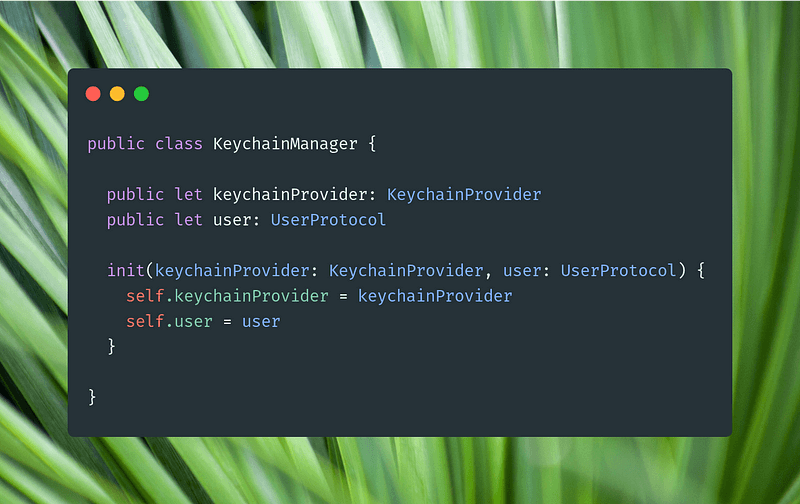
One last thing. Please be consistent in the codebase. Don’t go for one logic in one place and a different one in another. Consistency makes understanding your codebase much easier. Especially when there are many team members.
Read next
Create a React and SwiftUI-Inspired Web App With Swift for WebAssembly on MacOS With SwiftWasm
Building a web UI in SwiftUI-inspired syntax with Tokamak, compiled to WebAssembly by SwiftWasm — the toolchain, the project setup and the first app.
Get Started With Swift for WebAssembly on macOS With SwiftWasm
Installing the experimental Swift snapshot with WebAssembly support on macOS, then getting the first Swift code running inside a Wasm runtime.
Introducing Swift Action Delegate pattern Part 2
Part two of the Action Delegate pattern: dropping the untyped Any sender and carrying it in the DelegateAction payload instead, so no casting is needed.